Every genre in gaming has a birthplace, and for online RPGs it is a text prompt. Before 3D engines, before pixel art, before graphics at all, there were rooms described in prose, exits listed in brackets, and other human beings typing in the same world as you. The remarkable thing is not that these games existed. It is that many of them never stopped running, and the ideas they invented, persistent characters, player economies, levelling, guilds, idle progression, are load-bearing in every online RPG made since, including ours.
This page is two things at once: an honest tour of the text based RPGs still worth your evenings in 2026, and a short history of how their ideas escaped the terminal and ended up powering modern browser MMOs. We build one of those modern descendants, and we will be clear about where it sits in this lineage and where it does not.
What Counts as a Text Based RPG
The family has three branches, and knowing which one you are craving saves a lot of wandering. Interactive fiction is the single-player branch: Zork and its thousands of descendants, where you type verbs at a parser and the game is a puzzle box made of prose. MUDs, multi-user dungeons, are the multiplayer branch: persistent worlds running on servers for decades, where hundreds of players fight, trade and role-play in real time through text alone. The history of MUDs begins in 1978 at Essex University, and a MUD is, in a very literal sense, the first MMORPG. Browser text RPGs are the third branch: games like Torn that traded the parser for menus and links, kept the numbers and the other players, and became some of the most durable games on the internet.
What unites all three is the deal they offer: the game provides structure, stakes and other people, and your imagination provides the rendering. Nobody who has felt a MUD raid come together over nothing but scrolling text ever fully accepts that graphics are what makes a game immersive.
The Living Classics You Can Play Tonight
Torn is the giant of browser text RPGs: a crime city where hundreds of thousands of players train, fight, trade and scheme, with an economy deep enough to have its own analysts. It is menus and numbers rather than a parser, and its long clocks make it a game you live alongside rather than binge. The catch: it is famously ruthless to newcomers, and patience is the real skill.
Aardwolf is the MUD to try if you have never tried a MUD: a huge, actively maintained world with modern conveniences layered over the classic telnet experience, playable through a browser client. The catch: the interface asks you to learn it, and the first hour feels like learning to read again. The second hour is when it clicks.
Kingdom of Loathing wraps a surprisingly rigorous RPG in stick figures and puns. Turn-limited days give it a natural rhythm, and its optimisation community is legendarily serious about a game that refuses to be. Fallen London is the literary branch alive and well: a gothic Victorian city told in thousands of beautifully written story fragments, less about numbers than about wanting to know what happens next.
| Game | Branch | Cost | The one-line catch |
|---|
| Torn | Browser text RPG | Free, optional subs | Ruthless to newcomers; measured in months |
| Aardwolf | MUD | Free | The interface is the first boss |
| Kingdom of Loathing | Browser text RPG | Free, donations | Mostly solo under the jokes |
| Fallen London | Browser story RPG | Free, paid stories | Prose first, systems second |
| Improbable Island | Browser text RPG | Free | Strangeness is the point; depth is social |
| AI Dungeon | AI parser fiction | Free tier | No fixed rules means nothing to master |
| TerraX | Rendered idle MMO, text-game bones | Free | Not text based; earns its place by lineage |
Improbable Island carries the comic multiplayer torch with communal building and genuinely strange writing. And AI Dungeon represents the newest branch: a parser with a language model behind it, where the story goes wherever you push it. The catch there is the flip side of the freedom: without fixed rules there is nothing to master, and it is closer to improvised fiction than to an RPG with stakes.
Why Text Endures While Engines Age
Graphics date. Prose does not, or at least it dates the way novels date, which is to say it can still be the best thing you touch all week forty years later. A 2004 3D MMORPG looks like 2004 forever; a well-written room description is as vivid now as the day it was committed. That is half the reason the classics above survived their contemporaries.
The other half is structural. Text games are cheap to run, cheap to extend and light enough to play anywhere, on any machine, over any connection, at work in a window that looks like email. Their communities stayed small enough to stay communities. And their designs were forced to be deep rather than spectacular: when you cannot dazzle anyone, the numbers underneath have to be worth thinking about. Every durable text RPG is, under the hood, an economy and a set of trade-offs good enough to hold attention with no help from a renderer.
The Inheritance: From MUDs to Idle MMOs
Follow the family tree forward and something interesting happens. The MUD's core loop, issue commands, wait for the world's tick, read what happened, plan again, did not die when graphics arrived. It moved sideways, into the idle and incremental genre. An idle MMO where you dispatch a mining crew, wait out a real-time expedition and read the results is running the exact cadence a MUD player would recognise from 1990, with the terminal swapped for a browser tab.
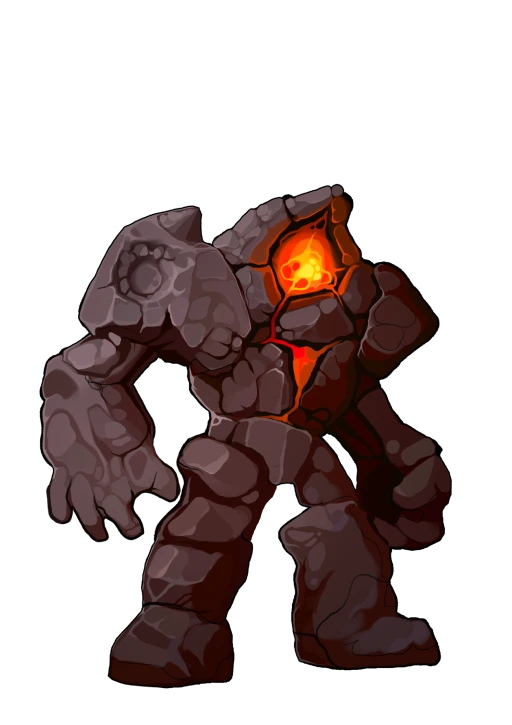
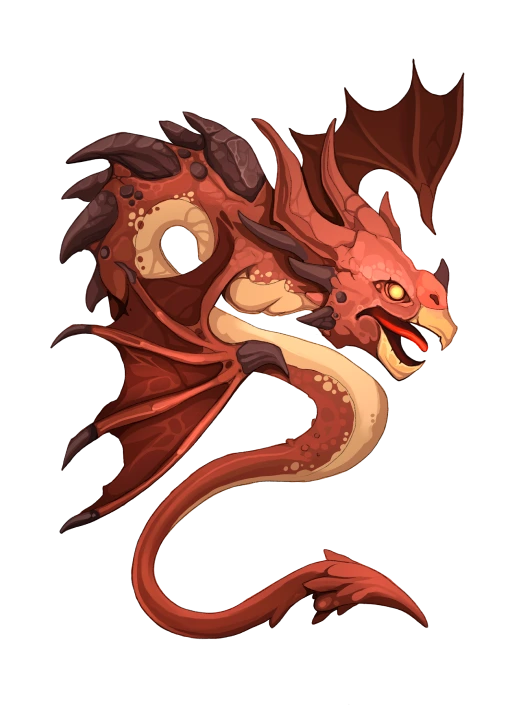
TerraX sits squarely in that inheritance, and one feature makes the lineage literal: the raid combat log. When your character fights a world boss, the fight resolves on the server and is narrated to you in written lines: the blow you turned aside, the potion drunk at the brink, the ash that filled your lungs, the moment you went down and were dragged back up by a stranger's spare potion. Players scroll it back like a story, because it is one. Here are four of its lines, quoted verbatim from the narration the server writes as a fight unfolds:
The beast overextends. You pour everything into the gap.
The tail comes round low and catches you before you can drop.
Went down and clawed back up, recovering 169 HP.
Braced behind the shield and turned aside 214 damage.
We render the world in full art, but when the fight matters most, the game reaches for the oldest tool in the genre: prose. The raid guide shows whole passages of it, along with the numbers underneath.
Numbers, Patience and Other Text-Game Virtues
Text RPG veterans make unusually good players of economy MMOs, and the reasons say a lot about both genres. Text games teach you to read systems instead of surfaces: when the game is numbers on a page, you learn what the numbers mean, and no particle effect can mislead you about whether a trade is good. They teach patience with real-time clocks, because everything in a MUD or in Torn happens on a timer measured in hours. And they teach that other players are the content: the market, the rivalries, the alliances.
All three virtues transfer directly to TerraX. The marketplace rewards the player who reads price history like a MUD player reads a room. Expeditions, forges and breeding run on real hours. And the deepest systems, guild sieges, the beast bloodline market, boss raid pools, are entirely about other people. If you came up on text games, the trading guide will feel like coming home.
Free Player ToolsEvery TerraX Calculator
If reading the numbers is your idea of fun, the calculators are the whole game on a page: ore per energy, cast odds, craft chains and stat sheets, straight from the live balance data.A Short Glossary, So the Classics Make Sense
Text RPG communities speak a dialect that predates most of the internet, and knowing a dozen words makes every game above friendlier. A MUD is a multi-user dungeon, a persistent multiplayer text world; MUSH and MOO are its social and programmable cousins. The parser is the part that reads what you type; fighting it is a rite of passage. A mob is any computer-controlled creature, short for mobile, a coinage from the original MUD era that graphical MMOs still use without knowing why.
A tick is the world's heartbeat, the fixed interval on which regeneration, weather and world events resolve; modern idle games run on the same idea with friendlier clothes. Rent was the old cost of keeping items while logged off, an early answer to persistent-world storage that mostly died out. Permadeath means a dead character is gone forever, still standard in some MUDs and the reason their veterans tell better war stories than anyone. Rolling is generating a character's random stats, and alts are your secondary characters, both words that outlived the terminals they were born on. When you meet these ideas wearing modern art, worker crews on a tick, bloodline stats rolled at a beast's hatching, the lineage from 1978 to a 2026 browser MMO stops being a metaphor and becomes a family tree you can trace term by term.
Which Text Based RPG Should You Actually Start
Choose by the itch, not the reputation.
You want the deepest multiplayer numbers game: Torn, and accept that the first months are an apprenticeship.
You want the authentic 1990s MMO experience: Aardwolf, in a browser MUD client, with the willingness to learn an interface.
You want beautiful writing above all: Fallen London, read slowly, like the serialised novel it secretly is.
You want to laugh: Kingdom of Loathing, which is still funnier than games with hundred-million-dollar budgets.
You want freeform story with no rules: AI Dungeon, treated as a writing partner rather than a game to win.
You want the text-game soul with a rendered world and real stakes: that is the niche TerraX was built for, and the next section is the honest pitch.
If You Want the Soul With a World Attached
Here is our honest pitch to a text-game player, and only the parts that are true. TerraX gives you the things the genre trained you to love: a real player economy where reading the market beats clicking fast, real-time processes that respect your absence, progression measured in unlocked capability rather than cutscenes, guild politics, and a combat log that narrates your raids in prose. It adds the things text could not: a shared rendered world, a fishing minigame that is actually about timing, art worth looking at, and an economy denominated in a real stablecoin, so the fortune you build trading has a floor under it that Torn's points never had.
What it does not give you: a parser, permadeath stakes, or the pure imaginative minimalism of the classics. If that minimalism is the whole point for you, play the games above; they are listed because they are excellent. If you want the bones with a body, the account takes five minutes and costs nothing, and the beginner's guide reads exactly like the genre taught us to write: numbers first, promises last.