








Quest log: on this page
- What Changed: The Tap Contest Is Over
- How a Raid Resolves, Round by Round
- Your Loadout Is Frozen the Moment You Deploy
- Weapon Speed Is Half Your Damage
- Potions Are a Loan, Not a Cost
- Eat Before You Fight
- Brace: One Energy for Two Rounds
- Twelve Things That Can Happen to You
- Going Down Is Not the End
- How the Money Is Split Now
- Drops: The Boss Matters More Than Your Damage
- Why the Artefacts Are the Real Prize
- The Experience Brackets
- What a Raid Actually Costs You
- If the Boss Wins, Nobody Gets Paid
- Reading Your Own Fight
- The Short Version
For two years the TerraX boss battle rewarded whoever could hit a button hardest. The server counted your damage ticks, credited a flat lump per tick, and paid out by share. Your gear barely entered into it. Staying at the screen did. That version is gone. The raid now runs as a server simulation: you send a character through the gate carrying a frozen copy of your stats, a stack of potions and a hot meal, and the fight resolves round by round whether your browser is open or not. What you earn is decided almost entirely by what you were carrying when you walked in. This guide covers what actually changed, which numbers move your payout, and the specific preparation that separates a fighter who collects a token share from one who walks out with a legendary crafting artefact.
What Changed: The Tap Contest Is Over
The old boss battle was a tapping contest. Damage was credited in flat lumps as you pressed, so your weapon set the pace between presses and very little else. The practical ceiling was how long you were willing to sit there, which meant two players in identical gear could walk away with very different shares of the pool for reasons that had nothing to do with how well they had built their character.
The rebuild removes the client from the damage path completely. There is no button that deals damage any more. Everything is resolved on a fixed 30 second tick, using the same combat formulas the open world uses, from a snapshot of your stats taken at the moment you deployed. Two consequences follow immediately, and they are the whole point. Attendance no longer pays. Gear does.
How a Raid Resolves, Round by Round
A raid opens with a muster window of 30 minutes before the first round lands, and the fight itself runs for up to 90 minutes after that. You can send a character in at any point while the raid is live, right up until the boss falls or the clock expires. Arriving late is not blocked, it simply leaves you fewer rounds to do damage in.
Each round is 30 seconds. Your character swings on its own cadence, the boss answers with two attacks, and both sides roll against the standard model: a hit check, a damage roll with 15% variance either way, a crit check, then damage reduction on the receiving side, floored at 1. One asymmetry is deliberate and worth knowing: the boss has no damage reduction. Nothing you deal is mitigated. Everything the boss deals is mitigated by your armour.
Boss health is not a fixed number. It is sized from turnout at the first round: 100,000 plus 40,000 for every character already mustered. Anyone who joins after the fight is live adds a reduced 20,000, because they will fight for less of it. A five person raid faces roughly 300,000 health. A hundred person raid faces 4.1 million. In a mixed field against a Vorthuun tier boss, five entrants take around 65 minutes to bring it down, twenty take around 54, fifty take around 37 and a hundred take around 29. Turnout is what makes the clock safe.
Your Loadout Is Frozen the Moment You Deploy
At the instant you send your character in, the game copies your attack damage, accuracy, crit chance, crit damage, evasion, damage reduction, maximum health and weapon attack speed onto the entry. That copy fights the whole raid. Swapping gear afterwards changes nothing, because the simulation is no longer reading your character sheet. Your gear also stays usable elsewhere while the fight runs, so there is no reason not to bring your best.
Two things get folded into the snapshot that are easy to overlook. Your beast follower's bonuses apply, raising your crit chance by up to 10% of its own value and your evasion by up to 6% of its own value, both scaled by the beast's rarity and stats. And any consumable buff you have running is read straight into the copy, so a weapon buff multiplies your damage for the whole raid and an armour buff recalculates your damage reduction from the boosted defence. Drink before you deploy and the raid carries it the whole way.
Weapon Speed Is Half Your Damage
This is the single most misread part of the new system. Your swings per round are 30,000 divided by your weapon's attack speed in milliseconds, and any leftover fraction is carried into the next round rather than thrown away. A 2,400 ms weapon gets 12.5 swings a round, alternating 12 and 13. A 3,000 ms weapon gets exactly 10. That is a 25% throughput difference before a single damage number is rolled.
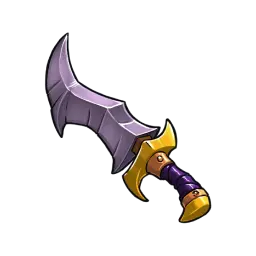
Run the arithmetic across the ladder and the ranking is not the one the damage column suggests. The Void Reaper at 188 damage and 3,000 ms produces 1,880 raw damage a round. The Leviathan Trident at 169 damage and 2,700 ms produces 1,878. They are within a rounding error of each other, and once you fold in the Trident's crit profile against the Reaper's, the Reaper only pulls ahead because it also carries 96 accuracy and 15% crit at 220% crit damage. Meanwhile the Obsidian Greataxe, on paper a monster at 138 damage, lands at 1,380 a round because it swings at 3,000 ms and only crits 5% of the time. The Noble Longsword at less than half the Greataxe's damage number still reaches 938 a round, and it hits far more often.
Accuracy matters less than people assume, but it is not free. Hit chance is your accuracy divided by the sum of your accuracy and the boss's evasion, times 100, plus 5, clamped between 50 and 95. Against Thornaxis at 8 evasion almost every endgame weapon is capped at 95%. Against Vorthuun at 15 evasion the Greataxe's 78 accuracy drops it to about 89% while the Void Reaper's 96 holds about 92%. That is a real 3% swing across a 57 round fight, and it is the reason the accuracy column on a weapon card is not decoration.
Potions Are a Loan, Not a Cost
You commit up to ten health potions at the gate and they leave your inventory immediately. Here is the part that changes how you should think about them: every potion you do not drink comes back to you when the raid resolves. Committing the maximum is close to free. The only potions you actually spend are the ones that kept you alive, and a potion that kept you alive bought you more rounds of damage, which is your payout.
They fire automatically when your health falls to 30% or below, restoring half your maximum, and the check runs between individual boss swings rather than at the end of the round. That detail exists so a character can never finish a round on the floor while still holding an unused potion. If a hit overkills you into negative health, potions keep draining until you are genuinely back above zero or the stack runs out.
The survivability numbers make the case better than any argument. A fully geared character at 339 health and 47.8% damage reduction, which is the full Adamantium set, survives 29 rounds with no potions and 171 with ten. A mid game build at 200 health and 25% reduction survives 11 rounds with none and 69 with ten. A newcomer at 130 health and 8% reduction lasts five rounds bare and 35 with a full stack. A typical fight is around 57 rounds. Read those numbers again: even a maxed character goes down before the halfway mark carrying nothing. Endgame needs about four potions to see a fight out. A mid game character needs eight.
Eat Before You Fight
The deploy screen has a meal slot alongside the potions, and it is the cheapest damage multiplier in the game. Your character eats the dish on the way through the gate and the effect is baked directly into the frozen stat copy, which means it lasts the entire raid no matter how long the fight drags on. A dish that nominally runs for 30 minutes protects a 90 minute fight. It also never touches your normal world buff slot, so it stacks multiplicatively with any consumable you already had running.
Only combat dishes qualify. There are two in the game today, both cooked rather than bought. Enhanced Fish Fillet Stew gives 15% extra weapon damage and takes eight hours to cook from 100 Balsa Logs, four Water, two Herbs and six Prime Fish Fillets. Supreme Dish gives 30% and is a 32 hour legendary cook from eight Squid, 500 Balsa Logs, six Herbs, sixteen Prime Fish Fillets and ten Water. The system also accepts a defensive dish the moment one is authored, but none exists yet, so today the meal slot is a straight damage slot.
Be clear on one thing: a mining buff is not a combat buff. Fish Bone Stew, Fish Fillet Stew and the vegetable stews all boost mining damage or mining luck, and the raid will refuse them. If the deploy screen tells you an item has no effect a raid can use, that is why.
Brace: One Energy for Two Rounds
The boss telegraphs. A ring of light opens on the arena floor and closes over about eight seconds towards the moment the next rounds settle, the same wind up you already know from Ashwing out in the world. Press Brace while that ring is filling and your character digs in, adding 15 percentage points to your damage reduction, still capped at the server wide 95% ceiling.
Two details are worth more than they look. First, the stamp covers both rounds resolved by the next scheduler pass, not one, so a single point of energy buys 60 seconds of protection. Second, brace has zero damage upside. It can only reduce what you take, and that is on purpose. Payouts are settled on damage alone, so the one interactive button in the raid is kept strictly on the defensive side of the ledger. Bracing well keeps you alive longer, which earns you more rounds, which earns you more of the pool. That is the whole route from the button to your balance, and it is the only one there is.
At one energy a brace, a level 60 character with 840 maximum energy could answer every telegraph in a full 90 minute fight for about 90 energy and still have most of the bar left. With Pro active and 3,340 energy, the cost is noise. If you are borderline on surviving, brace on every telegraph. Your combat log will tell you exactly how much damage each brace turned aside.
Twelve Things That Can Happen to You
Every round, each character has a 10% chance of rolling one of twelve events, and the result is applied before that round's swings and written into your combat log. They are roughly balanced between kind and cruel, and the same event will not fire twice in a row.
The ones you want are An Opening, which multiplies that round's damage by 1.35, Last Stand at 1.6 damage for 1.2 incoming, and Reckless Lunge at 1.5 damage for 7% of your health. Perfect Footing cuts incoming damage to 60% for the round. Scavenged Draught returns a quarter of your health and Second Wind returns 15%. The ones you do not want are Sundered Guard, which raises incoming damage by 40%, Choking Ash, which cuts your output to 65%, and the two physical hits, Caught by the Sweep at 12% of your health and Falling Debris at 10%.
One hard rule governs all of them: no event can drop a character below one health. Only the boss is allowed to finish you off. A player who comes back to find their character died to a dice roll they never saw has been robbed, not entertained, so that outcome is simply not reachable.
Going Down Is Not the End
When your health and your potions both run out your character stops fighting, but every point of damage you already dealt is kept. You can send them straight back in for another 100 energy and another potion commitment, and because the entry takes a fresh stat snapshot, you can repair or upgrade gear between lives and the new copy is what fights. Redeployment does not add health to the boss either, so a raid that keeps redeploying gets shorter, not longer.
There is a second route back up, and it is new. A teammate who is still standing can pour one of their own committed potions into a downed fighter and put them back on their feet at half health. It costs the reviver a potion that can no longer save them, which is the entire point: every revive is a real decision rather than a courtesy. The reviver earns an assist, and assists nudge loot odds at resolution, capped at three distinct players revived per raid. They never touch the currency split. Reviving a stranger will not make you rich, but it costs you one potion out of ten and it turns somebody's wasted 100 energy back into a fighter, which is usually worth more to the raid than the potion was worth to you.
How the Money Is Split Now
The prize pool is 30% of all store, subscription and deposit revenue, accumulated in the reward pool balance. When a boss falls, that entire accumulated balance is distributed. Not a slice of it, all of it. You can see the current figure on the deploy screen before you commit, which is the single most useful number on that panel.
Your share is your damage divided by the total damage of everyone who fought, with one modifier: characters still standing when the boss drops have their damage counted at 1.15 times. There is no minimum contribution and no top three bracket. Every point of damage earns proportionally, from the first fighter to the five hundredth, and turning up with a modest weapon still puts you on the payroll.
That survival multiplier is where a lot of value quietly changes hands. Two characters who dealt identical damage do not earn identical amounts if one of them is face down at the end. The one still standing takes 13% more of the split. Combine that with the potion refund and the conclusion is blunt: bringing ten potions costs you nothing in expectation and protects a 15% bonus on everything you earned.
Drops: The Boss Matters More Than Your Damage
Item drops run on a completely separate lottery from the currency, and it is deliberately flat. Every participant starts with a base weight of 20. Your damage share adds only half a point per percent, with a 1.2 multiplier if you are in the top ten. Assists add 1.5 each up to three. In practice that means a player contributing 2% of the damage has a weight of about 21 against a top contributor's 25 or so. Loot is close to a raffle, and that is on purpose.
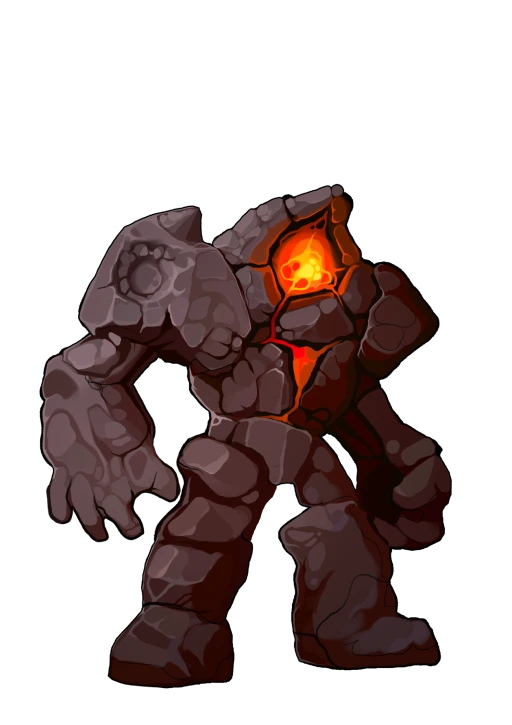
What is not flat is which boss you are fighting. Every individual unit in the boss's drop table is rolled separately, and the four raid bosses have wildly different tables. Thornaxis the Ravager drops one Talon, one Heart, 100 Supply Chests and 40 Dungeon Keys, which is 142 separate draws going out to the field. Vorthuun the Cyclone Eye drops the Eye, the Wing, 40 chests and 20 keys, so 62 draws. Ignaroth the Molten Colossus drops the Core, the Slate and five keys, which is seven. Syrak the Abyssal Wyrm drops five Dungeon Keys and nothing else.
Read that again with a calculator. A Thornaxis kill with 50 fighters hands out roughly three items per person on average. A Syrak kill with 50 fighters hands out five items to the entire server. If your goal is volume, turn out for Thornaxis and Vorthuun. If your goal is a specific artefact, turn out for the boss that carries it.
Why the Artefacts Are the Real Prize
The currency is the headline and the artefacts are the actual economy. Those boss parts are the gate on almost every piece of endgame gear in TerraX. The Adamantium set, the 320 defence four piece that lands you at 47.8% damage reduction, needs the Slate of Ignaroth for the breastplate, the Eye of Vorthuun for the helmet, the Talon of Thornaxis for the sabatons and the Heart of Syrak for the gauntlets. The Noble Longsword needs the Heart of Thornaxis. The Obsidian Greataxe needs the Heart of Syrak. The Taloned Pike needs a Talon, the Serpent Staff needs Scales of Syrak, and the Molten Pickaxe, the best mining tool in the game, needs the Core of Ignaroth.
Outside of the loot boxes those bosses themselves drop, there is no other source. You cannot buy them, mine them or fish them. This is the compounding loop the raid is built around: raid for artefacts, forge artefacts into better gear, bring better gear to raid for a bigger damage share. A player who skips raids is not just skipping a payout, they are locked out of the top of every gear ladder.
The Experience Brackets
Experience is paid on seven brackets by damage share, and it is only paid on a victory. Under 0.25% of total damage pays 5 experience. Crossing 0.25% pays 10, 0.5% pays 25, 0.75% pays 50, 1% pays 75, 2% pays 150, and 5% or more pays 250, which is the ceiling. Those thresholds are percentages of the whole raid's damage, so they get harder to reach as turnout grows. In a twenty person raid, an average contributor is sitting at 5% and collecting the top bracket. In a two hundred person raid, the same character is at 0.5% and collecting 25.
This is worth knowing but not worth chasing. Idle dungeons remain the strongest experience per energy in the game by a wide margin. Raid experience is a bonus on top of the currency and the drops, not a reason to pick a smaller raid.
What a Raid Actually Costs You
Energy is the obvious cost at 100 per deployment. At level 60 without Pro that is eight deployments out of a full 840 energy bar, and the bar only refills once a day at midnight UTC with no passive regeneration. With Pro's extra 2,500 it is 33. Braces are one energy each and effectively free next to that.
The less obvious cost is durability, and it is charged whether you win or lose. Your weapon loses half a point per round you participated in, so a typical 57 round fight costs about 28 durability and a fight that runs the full 90 minutes costs 90. On a Void Reaper with 2,000 durability that is around 70 ordinary fights or 22 long ones. On a Wardens Flail with 500 it is seventeen and five. Armour wear is driven by damage absorbed rather than time: every 5 points of damage you take costs one durability, spread randomly across your four equipped pieces with the last piece soaking the remainder. Indestructible weapons are exempt from weapon wear entirely, which is one more quiet argument for the starter gear you never have to repair while you are learning the fight.
If the Boss Wins, Nobody Gets Paid
The clock is real. If 90 minutes elapse and the boss is still standing, the raid resolves as a defeat and there is no payout at all. No currency, no experience, no drops. You get your unused potions back and your quest progress still counts, but the kill is what pays. Durability is still spent. Energy is still spent.
There is a silver lining that most players miss. Because the pool is only debited by what was actually credited, a failed raid leaves the entire accumulated reward pool untouched. It rolls forward. The next raid is fought over a bigger pot. If a boss has just survived, the following one is the most valuable fight on the calendar and worth turning out for even if you are undergeared.
Reading Your Own Fight
The arena keeps a live leaderboard of the top 25 damage dealers and a rolling combat log of your last 40 lines. The log is not flavour text, it is a diagnostic. It reports how many of your swings connected and for how much, how many boss attacks your evasion slipped, exactly what each brace absorbed, every potion drunk and how much it restored, and every event that fired. If you are trying to work out whether to spend on accuracy or on damage reduction, one fight's log answers the question better than any theorycrafting.
The results wall hands out seven titles at the end, on victory or defeat: Warlord for most damage, The Wall for most damage taken, Potion Goblin for most potions drunk, Iron Will for the highest damage dealt by a character who committed no potions and was still standing, Too Stubborn To Die for most redeployments, Sharpshooter for most critical hits and Field Medic for most fighters revived. Iron Will is the one worth chasing if you want to prove something. It is also, for what it is worth, terrible strategy.
The Short Version
Commit ten potions every time. Unused ones are refunded, and staying alive to the end multiplies your damage share by 1.15.
Bring a meal. Supreme Dish is 30% weapon damage for the whole fight, Enhanced Fish Fillet Stew is 15%. Both are cooked, neither is bought.
Check swings, not just damage. Divide 30,000 by your weapon's attack speed. A faster weapon with a lower damage number often out-earns a slower one.
Brace on every telegraph. One energy covers two rounds and it only ever reduces what you take, so there is no downside.
Turn out early. Early entrants size the boss, late entrants add half as much health but get fewer rounds to earn in.
Redeploy when you go down. Your damage is banked, and the fresh entry re-reads your stats, so repair first.
Pick your boss for what you need. Thornaxis and Vorthuun rain chests and keys. Ignaroth carries the Core. Syrak is dry unless you want the kill.
Show up after a failed raid. The unpaid pool rolls into the next fight.
The honest summary is that the raid stopped being a test of whether you were at your desk and became a test of whether you prepared. That is a harder game for the player who used to top the board with a fast finger and a much better one for everyone else. Your forge, your kitchen and your armour rack now decide what a boss is worth to you, and every one of those is something you can work on between fights.
TerraX Team
The chroniclers of TerraX: builders and storytellers of the mines, forges and battlefields. Follow along in the game itself.