Our verdict
What is the best crypto browser game in 2026?
Our pick is TerraX, a Web3 MMORPG that runs in any browser on desktop and mobile, with nothing to download and nothing to buy before you play. Unlike most crypto games it has no token: players earn USDT, a dollar stablecoin, by trading on a player-run marketplace, and fixed shares of the game's revenue, including 30% into world boss reward pools, are paid back to players. Signing in is a free signed message with no gas fee, and balances withdraw to your own wallet.
- Best for social farming: Pixels
- Best for farming and crafting: Sunflower Land
- Best for risk-to-earn: Cambria
Most lists of the best Web3 games are ranked on market capitalisation, trading volume or how many wallets connected last month. None of that tells you whether a game is worth your evening, and none of it tells you whether what you earn will still be worth anything when you try to cash it out.
This page asks two questions instead. Does the game genuinely run in a browser, with no launcher and nothing to buy before you start? And when it pays you, where does the money come from? We make TerraX, which answers the second question differently from most of the field, and we explain exactly how so you can judge it.
The One Question That Decides Every Web3 Game
A game that pays its players has to get that money from somewhere. There are only a few honest answers.
Token emissions. The game mints its own token and pays players in it. This costs the game nothing up front, which is why it is the common model. The value of what you earn depends on someone else wanting to buy that token later.
Other players' stakes. Risk-to-earn games have players wager value against each other. Your winnings are another player's losses.
Player trade. You sell what you make to other players, and the game takes a fee.
Game revenue. The game pays a fixed share of what it earns back to players, in a currency it cannot print.
None of these is automatically bad. But they behave very differently when a game gets quieter. Emissions keep flowing while demand for the token falls, so earnings shrink in real terms. Revenue shares shrink with revenue, but what they pay out is still worth what it says. Knowing which model a game uses tells you what happens to your earnings in its bad months, which is the only time the question matters.
TerraX: A Browser MMORPG That Pays in a Currency It Cannot Print
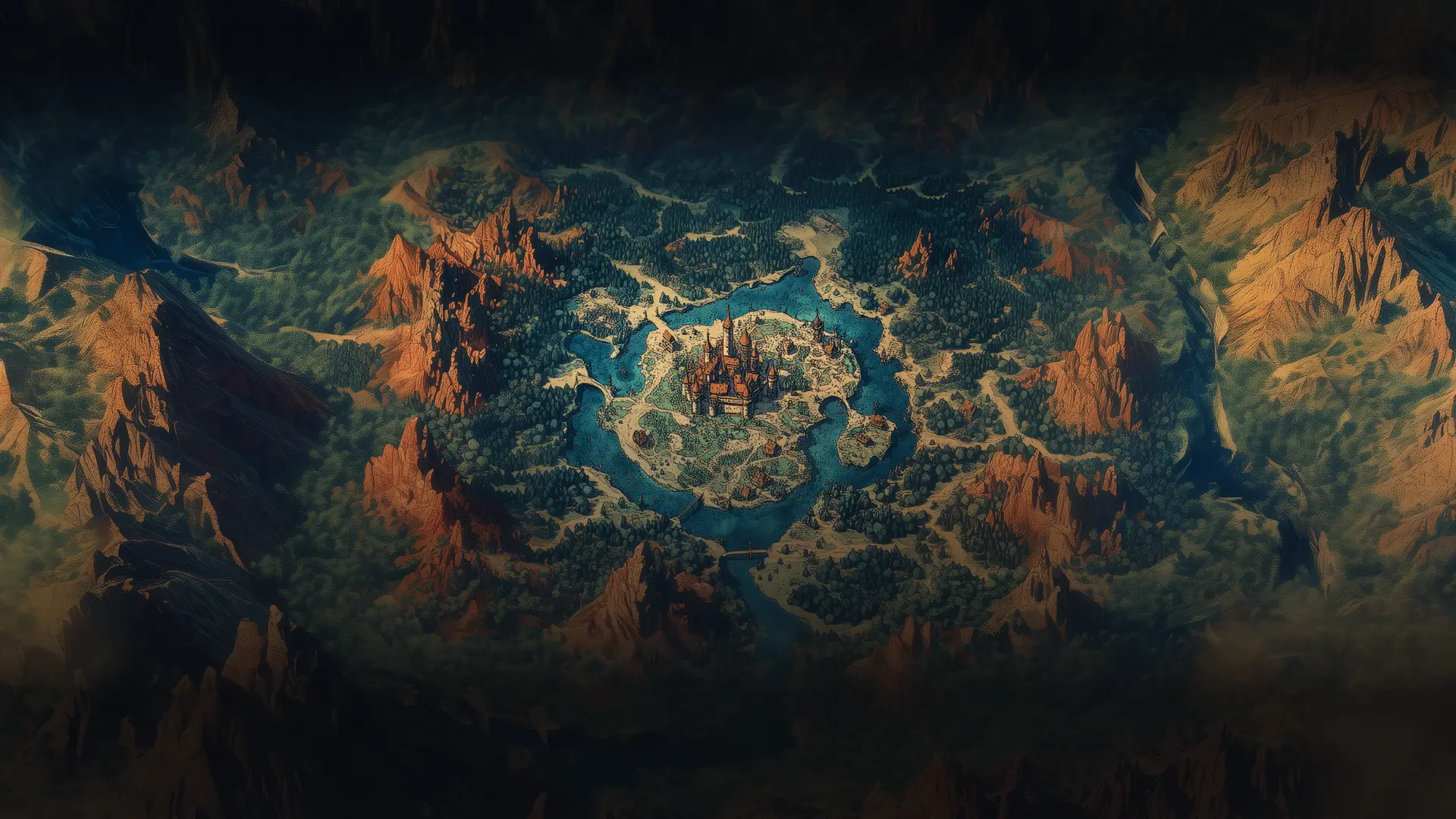
TerraX is a browser MMORPG first. You mine, harvest, fish, forge, run dungeons, raid world bosses, duel other players and fight guild wars over a map of 223 provinces. It runs in any browser on desktop and mobile at app.terrax.win, with nothing to install and nothing to buy.
The Web3 part is the currency. There is no TerraX token, no presale and no emissions schedule. Everything is priced in USDT, a stablecoin pegged to the US dollar, so a balance of five dollars is worth five dollars tomorrow. The money that flows back to players comes from fixed shares of the game's own revenue: 30% into a reward pool paid out at world boss fights, 10% to guild pools and 10% to a daily jackpot that anyone can enter free once a day.
That design has a trade-off, and we will state it. A revenue-funded pool cannot pay out more than the game earns. It will never pay the eye-watering sums some token games paid in their first months. It also cannot collapse the way those payouts did, because there is no token to collapse.
Free Player ToolsEvery TerraX Calculator
Before you decide what to produce, check what it is worth. Free calculators for mining, fishing, forging and builds, running the live game's own balance data.How a Free Player Actually Earns in TerraX
Honesty first: for a free player, the main income is the marketplace. You gather and craft, then sell to other players. Every listing is another player's stock at a price they set, and a price floor stops goods being dumped below their material value. Processed goods usually sell for more than their inputs, which is why crafting is where the margin lives.
World boss events are the second route. Entry costs 100 energy and up to ten health potions. When the boss falls, the reward pool is split by the damage each character dealt, with a 15% bonus for those still standing. Because the split follows damage, well-geared characters take the larger shares. A new player earns a small cut, and the cut grows with the character.
The third is Lokir's Wellspring, the daily jackpot, with one free entry per player per day.
Withdrawals go to your own wallet: $10 minimum, $50 maximum per 12 hours, and a 3% fee, or 5% to Ethereum. You never need to deposit. Depositing exists only to buy from the store or the marketplace. Our earning guide walks through each route with numbers, and the trading guide covers selling well.
Price It FirstForge Calculator & Craft Tracker
The margin in a player economy lives in the crafting chain. Price any recipe's full material tree against its forge time before you sell raw.The Other Web3 Browser Games, and What Each One Pays In
These are the crypto games we think are worth knowing about if you want to play in a browser, with the earning model of each stated as plainly as ours.
Pixels is a social farming game in the Stardew Valley mould, played in a browser. It moved to the Ronin network in late 2023, and its PIXEL token launched in February 2024, replacing the older BERRY currency. It is friendly, busy and easy to start. What you earn is PIXEL, so its value depends on the token's market price.
Sunflower Land is a free-to-play farming game where you grow crops, cook and craft, then trade with other players. In 2025 it replaced its SFL token with FLOWER at a one-to-one rate, launching on Base with plans for other networks. It has a patient, loyal community. Earnings are again in its own token.
Cambria is a risk-to-earn MMO styled after old school RuneScape, where players stake value on duels and clan wars. It is well made and honest about what it is. The model is the opposite of ours, and we compare the two in detail in TerraX versus Cambria.
Axie Infinity is the game most people think of when they hear play-to-earn. It belongs here as a correction: Axie Infinity: Origins is not a browser game. On PC it installs through the Mavis Hub launcher, and on mobile it is a downloaded app.
| Game | Runs in a browser? | Genre | You earn | Paid for by |
|---|
| TerraX | Yes, desktop and mobile | MMORPG with guild war | USDT, a dollar stablecoin | Player trade and fixed shares of game revenue |
| Pixels | Yes | Social farming | PIXEL token | The token's market |
| Sunflower Land | Yes | Farming and crafting | FLOWER token | The token's market |
| Cambria | See their site | Risk-to-earn MMO | Staked winnings | Other players' stakes |
| Axie Infinity: Origins | No, launcher or app | Creature battler | Ecosystem tokens | The token market |
If you enjoy farming and do not mind earning in a token, Pixels and Sunflower Land are both good games. If you want a full MMORPG and want what you earn to be worth what it says, that is the gap TerraX was built for.
Connecting a Wallet Safely
The most common fear about Web3 games is the wallet, and it is a fair one. Here is the rule that protects you in every game on this page: signing in should cost nothing and move nothing.
TerraX sign-in is a free signed message. There is no gas fee and no transaction, and the game never gets access to your funds or your seed phrase. You can use MetaMask, WalletConnect or Coinbase Wallet. If you have never owned a wallet, a Google, X or Discord login creates one for you, so no crypto experience is needed to start.
Any game that asks you to approve a token spend, pay gas or buy an item before you can play has told you something about its business model. Our FAQ covers wallets, withdrawals and fees in full.
Six Red Flags in a Web3 Game
Crypto gaming has produced some excellent games and a great many schemes. These are the signs we would check before giving any Web3 game an hour, ours included.
You must buy something to start. An NFT, a token or a starter pack before your first minute of play.
Nobody can tell you where payouts come from. If the only answer is "the token", your earnings depend on the next buyer.
The website talks about price, not play. Charts on the home page usually mean the game is the smaller product.
Sign-in asks you to approve a transaction. Logging in should be a free message, never a spend approval.
Withdrawals are vague. Minimums, limits and fees should be stated before you play, not discovered after.
The game is no fun without the money. Ask yourself whether you would play it for nothing. If not, you are working, and there are better-paid jobs.
For background on the wider field, the blockchain game entry on Wikipedia is a fair, neutral summary of the wider field.
Why the Game Has to Come First
The Web3 games that last are the ones people would play anyway. An economy is only as healthy as its demand, and demand for in-game goods comes from players who want to use them, not from players who want to sell them.
That is why TerraX is built as an MMORPG with an economy, not an economy with a game attached. There are idle dungeons across five difficulties, from Easy to Nightmare. Real-time combat. A fishing game with a rod ladder and time-of-day catches. A ranch where beasts breed and pass on their stats. Co-op dungeons, world boss raids and ranked PvP. And a war map where guilds claim land and defend it. Players buy ore because they need it to forge, not because they are speculating on it.
If that is the shape of game you want, our pages on the best MMORPG browser games and the best free browser MMORPGs judge TerraX as a game, with the money left out entirely.