
















Quest log: on this page
The question every new player asks first: how does the money actually work? TerraX pays in USDT, the same stablecoin you can hold in any wallet, and there is no game token between you and your earnings. No pre-sale, no chart to watch, no hoping a token holds its peg to your playtime. You earn USDT, you withdraw USDT. This guide lists every income source in the game and exactly how withdrawals work, with the real numbers.
The Marketplace: The Main Engine
Most player income flows through the marketplace. Everything your workers mine and harvest, everything you fish, cook and forge, can be listed for other players to buy in USDT. The economics favor people who understand the crafting bottlenecks: water only comes from fishing, artefacts only come from world bosses, and dungeon materials only come from dungeons, so whoever supplies a bottleneck sets its price. You do not need to be a fighter to earn here. A well-run harvesting operation selling planks and ingredients is a real business.
The Price Guard: Why the Market Stays Honest
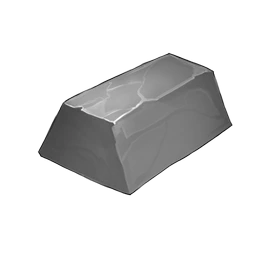
A player economy is only worth joining if it cannot be trivially manipulated, so it is worth knowing that TerraX runs an active price guard on the marketplace. Listings are checked against recent trading history, prices far above or below the going rate pay steep extra fees, and enforced floor prices stop coordinated dumping from cratering a material overnight. There is also a small 1% fee for cancelling a listing, which keeps order books real instead of decorative. None of this limits honest trading. It exists so that the price you see for Gold Ingots reflects what Gold Ingots are actually worth, which is precisely what you want from a market you plan to earn a living in.
Boss Battle Prize Pools
TerraX routes 30% of store revenue back to players through reward pools. World boss battles pay the top three damage dealers 20%, 15% and 10% of the pool, with the rest distributed to participants. This is the game's loudest promise made concrete: the money players spend in the store partly becomes the money players win in the arena. Battles cost 100 energy to join, so even a mid-strength account can show up, deal damage and take a share.
Fishing Tournaments
Competitive fishing runs on entry-fee tournaments: 20 USDT buys you in, and the prize pool pays out to the leaderboard. If you have invested in rods and know the pools, tournaments convert fishing skill directly into income on a schedule you can plan around.
Guild Wars Revenue Share
The endgame teams play for the biggest pot: guilds that hold the Capital during the monthly war window earn a share of 10% of all game revenue. That turns guild membership from a social feature into an economic alliance. If you want the full mechanics, our guild wars guide covers troops, sieges and the war calendar.
Referrals
Bringing in players pays too: the referral program shares 20% of the game's earnings from the people you invite. For community builders and content creators, this compounds quietly alongside everything else on this list.
Energy: The Daily Budget Behind It All
Every income source above draws from the same daily wallet: energy. You start with 250, gain 10 more per level, and everything has a sticker price. A fishing cast costs 5, starting a forge costs 10, a dungeon entry 25, and a world boss appearance 100. That pricing is a quiet strategy layer. A boss battle costs the same energy as twenty fishing casts, so the question is never can I afford this, it is what else this energy could have produced. Players who treat energy like a budget instead of a bar to be emptied consistently out-earn players with twice their playtime. Spend it where your account is strongest.
A Realistic First Week
Here is what the road actually looks like, with no glamour applied. Day one, your 2 free workers go down the mine and into the groves while you learn fishing, and your 250 starting energy covers plenty of casts. By midweek you have enough Copper and Coal moving to keep a forge queue busy, and your first Copper Ingots are worth listing. Ingots sell better than raw ore because most players are impatient, and impatience is the most reliable customer in any economy. By the end of the week you are running longer expeditions, eyeing your first dungeon key, and your balance has started moving. Nobody honest will promise you a number, because your earnings depend on what you sell and what the market pays. What the game promises is narrower and more useful: everything you produce has a buyer, and everything you earn is yours to withdraw.
How Withdrawals Actually Work
Earnings sit on your account balance until you withdraw them to your own wallet. The minimum withdrawal is 10 USDT, withdrawals carry a 3% processing tax, and you can withdraw once every 12 hours. Those limits exist to keep the economy stable and bot-resistant, and they are the same for everyone. There is no lockup beyond the interval and no staking requirement to access your own money.
What It Costs to Start: Nothing
Every account starts free with 2 workers and 250 energy, which is enough to run mining and harvesting expeditions from day one. The store exists and it accelerates things, but the earning loops above are open to accounts that never spend. Play, gather, sell, withdraw. That is the whole model, and it has been running for over two years.
TerraX Team
The chroniclers of TerraX: builders and storytellers of the mines, forges and battlefields. Follow along in the game itself.